Tina Flores · 9 September 2026
Navigating Content Distribution Challenges in Fragmented Digital Ecosystems
Digital ecosystems have splintered into countless platforms, devices, and regional networks, each operating under distinct rules that complicate how content reaches audiences. Creators and distributors now manage simultaneous requirements from social networks, streaming services, news aggregators, and mobile applications, while algorithms shift without warning and regulations differ sharply across borders.
Platform fragmentation creates immediate hurdles because each environment demands tailored formats, metadata, and engagement tactics. A single video might need multiple aspect ratios, captions, and thumbnails to perform across short-form video apps, long-form streaming sites, and traditional web portals. Research from industry analysts shows that inconsistent technical standards force repeated encoding passes and quality checks before distribution begins.
Platform Algorithms and Reach Limitations
Algorithms determine visibility on major platforms, yet their ranking signals remain opaque and subject to frequent updates. Data indicates that changes in recommendation systems can reduce organic distribution by double-digit percentages within weeks, pushing distributors toward paid amplification or cross-posting strategies. Observers note that smaller outlets often lack resources to test multiple approaches simultaneously, resulting in uneven audience growth across ecosystems.
Device diversity adds another layer because content must render correctly on phones, tablets, smart televisions, and desktop browsers with varying screen sizes and connection speeds. Studies conducted by academic groups reveal that mobile-first designs still encounter compatibility gaps when users access material through emerging wearable or voice-activated interfaces.
Regulatory Pressures Across Regions
Compliance requirements multiply as governments introduce data protection and content moderation rules tailored to local markets. The European Union's ongoing implementation of digital market legislation, scheduled for further enforcement phases around September 2026, requires detailed reporting on algorithmic transparency and user data handling. Distributors must therefore maintain separate compliance workflows for European audiences while meeting differing standards in North American and Asia-Pacific jurisdictions.
Figures from regulatory bodies such as the Australian Competition and Consumer Commission highlight how platform accountability measures affect content syndication deals, forcing renegotiations of licensing terms that once allowed seamless republication across borders. Similar patterns appear in Canadian and Singaporean frameworks, each adding unique disclosure obligations.
Monetization and Audience Fragmentation
Revenue models diverge sharply across ecosystems because advertising rates, subscription tiers, and creator fund structures vary by platform and region. A distributor might earn stable returns from one streaming service while seeing minimal compensation from social video apps despite comparable viewership. Reports compiled by research institutions show that multi-platform campaigns require separate analytics stacks, complicating efforts to attribute revenue accurately.
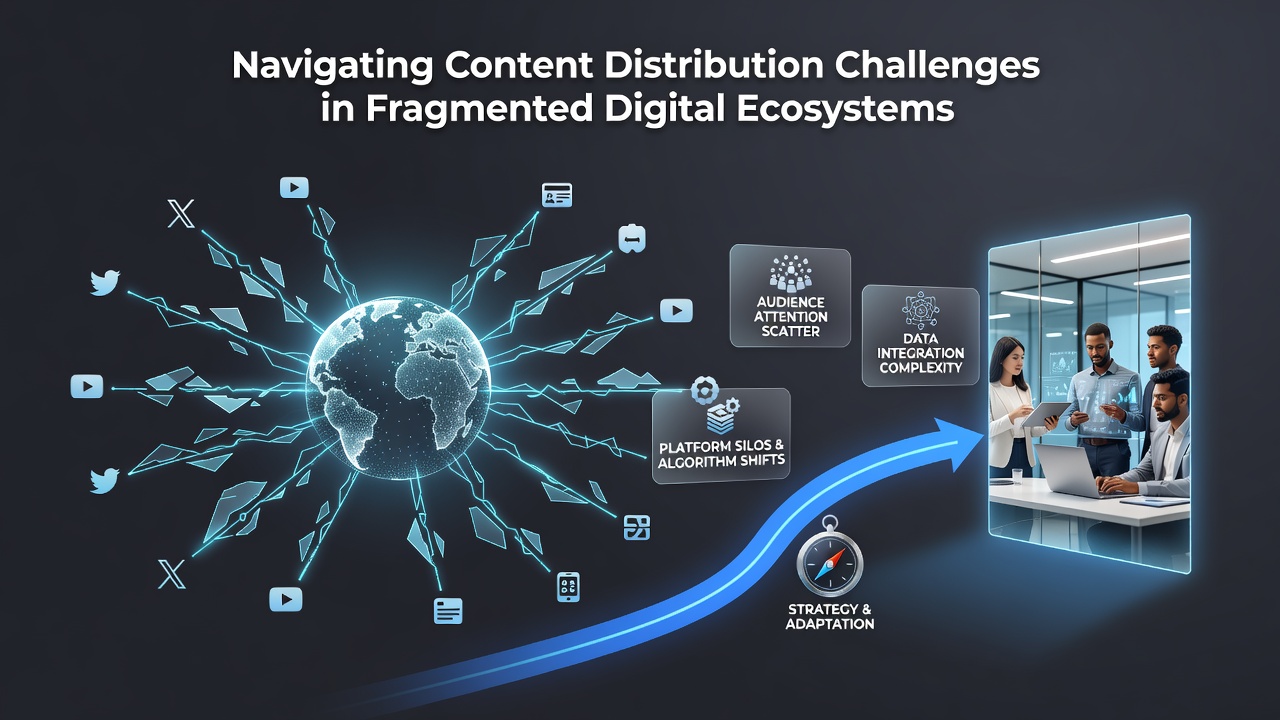
Audience attention itself fragments as users maintain profiles on several services simultaneously. Cross-platform tracking tools face restrictions from privacy regulations, leaving distributors with incomplete pictures of engagement patterns. Evidence suggests that first-party data collection becomes essential, yet building reliable datasets demands sustained investment in consent mechanisms and secure storage infrastructure.
Technological Adaptations and Emerging Standards
Technical solutions such as content delivery networks and metadata standards attempt to bridge gaps, but adoption rates differ among platforms. Organizations that implement unified tagging systems report faster rollout times, though integration still requires custom connectors for each major service. Those who've studied distribution pipelines note that automation reduces manual reformatting but cannot eliminate the need for human oversight when cultural or regulatory nuances arise.
Artificial intelligence tools now assist with caption generation, localization, and performance prediction, yet accuracy varies across languages and content categories. Federal Trade Commission guidance on automated decision-making encourages transparency about these tools, prompting distributors to document their usage and provide user-facing explanations where required.
Case Examples from Current Practice
One independent news outlet addressed fragmentation by establishing a central content hub that automatically generates platform-specific variants while preserving editorial control. The approach reduced production time by roughly thirty percent according to internal metrics, though ongoing algorithm adjustments still demanded weekly reviews. Another example involves a regional video creator who coordinated simultaneous releases across three short-form platforms and one subscription service, using shared analytics dashboards to identify underperforming formats quickly.
These instances illustrate how coordinated workflows and selective tool adoption help navigate ecosystem differences without requiring separate teams for every channel.
Conclusion
Fragmented digital ecosystems require distributors to balance technical adaptation, regulatory compliance, and revenue diversification within a single operational framework. Continued evolution of platform policies and regional rules will likely sustain these pressures, making flexible infrastructure and localized expertise central to sustained reach and monetization.