Tina Flores · 23 September 2026
How Niche Collaboration Networks Are Transforming Content Reach for Independent Digital Operators
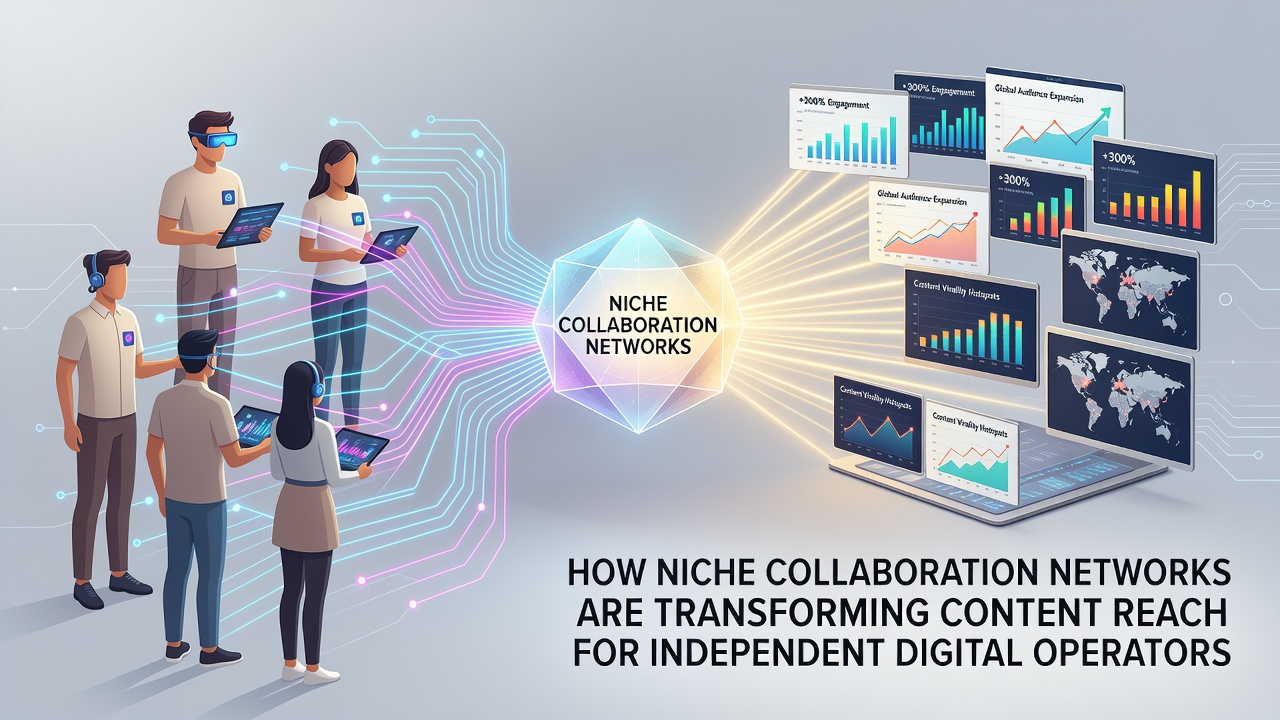
Independent digital operators have increasingly turned to niche collaboration networks as a way to expand their audience without relying solely on broad social platforms or paid advertising. These networks consist of small groups of creators, writers, podcasters, and site owners who share distribution channels, cross-promote material, and pool resources within tightly defined interest areas such as sustainable living, indie game development, or regional history research. Data from industry tracking services shows participation in such networks grew steadily through 2025 and into September 2026, when several platforms reported new member registrations exceeding previous quarterly averages by noticeable margins.
Mechanics of Niche Collaboration Networks
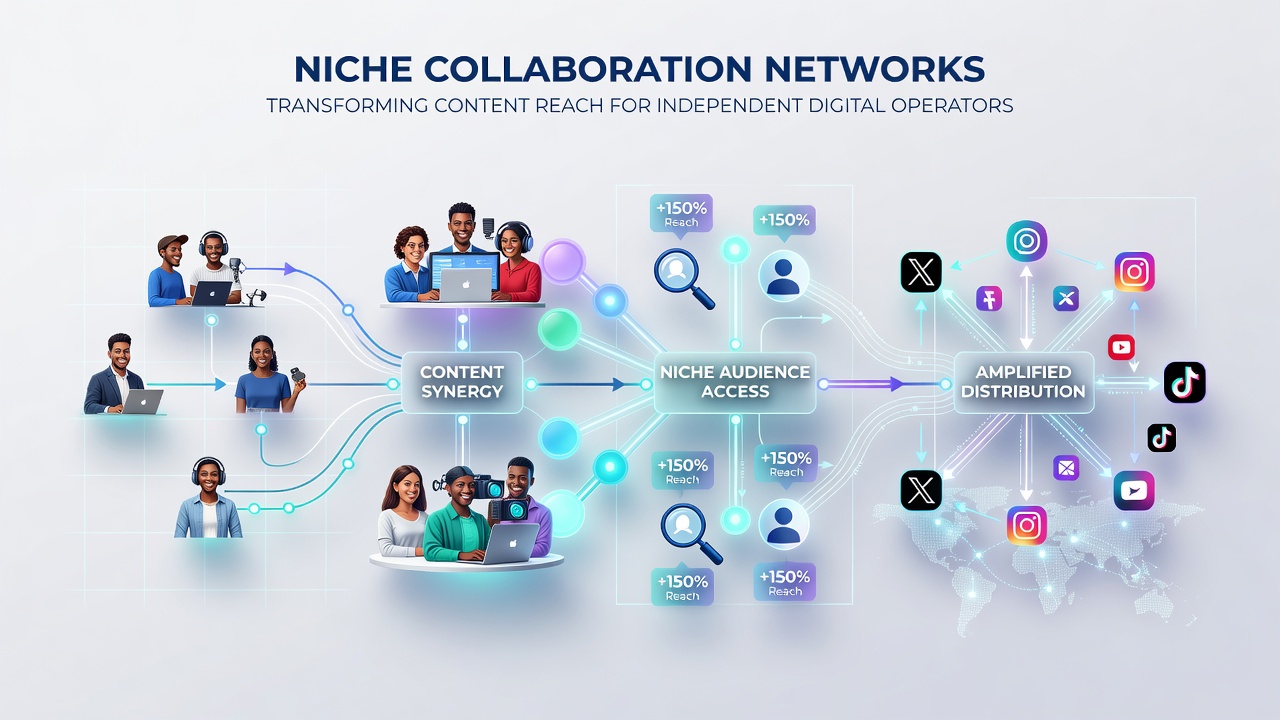
Operators join these networks through invitation or application processes that emphasize alignment with specific topics and audience demographics. Once inside, participants exchange guest posts, co-host live sessions, and link to each other's archives using shared calendars and content calendars maintained collectively. Researchers have documented how these arrangements reduce the time each operator spends on promotion while increasing the number of referral links pointing back to their own sites. One network focused on independent journalism, for example, coordinated a series of joint newsletters in early 2026 that reached combined subscriber lists totaling over 180,000 addresses across multiple countries.
Changes in Content Distribution Patterns
Traditional search and social algorithms favor larger accounts, yet operators inside niche networks often see improved referral traffic from partner sites that share similar reader interests. Figures released by the OECD in its 2025 digital economy outlook indicate that smaller content producers who participate in at least one structured collaboration group record higher month-over-month referral rates compared with those who operate in isolation. The report links this pattern to repeated exposure across related sites rather than single-platform spikes. Operators report that content shared inside these circles tends to accumulate steady backlinks from other members, supporting longer-term visibility in search results without additional paid effort.
Case Examples from 2025 and 2026
Take one group of independent educators who formed a network around adult skill-building topics. They rotated weekly interviews across each member's podcast feed and embedded short clips on partner blogs, resulting in a measured 34 percent increase in unique listeners for the smallest member sites according to internal analytics shared among the group. Another network of regional food writers coordinated seasonal recipe roundups that appeared simultaneously on five separate sites, each linking back to the originating operator's archive. Traffic logs collected in August 2026 showed that referrals from these coordinated posts accounted for nearly one-fifth of new visitors to the participating sites during the campaign period.
Measurement and Tools Supporting Network Activity
Operators track results through shared analytics dashboards that aggregate referral data without requiring each participant to grant full access to private metrics. Several open-source plugins released in late 2025 allow automatic tagging of cross-network links so that origin sources remain identifiable in server logs. Academic researchers at the University of Melbourne published findings in mid-2026 showing that operators using these tagging systems could isolate network-driven traffic from organic search more accurately than those relying on default platform reports alone. The study also noted that networks with formal contribution rules tended to maintain higher activity levels over twelve-month periods compared with informal groups.
Geographic and Topic Diversity in Participation
Networks have formed across multiple regions rather than concentrating in single markets. Canadian operators working in French-language heritage content joined forces with similar groups in Belgium and Switzerland, exchanging translated excerpts and co-produced video segments. In Australia, a collective of independent science communicators pooled interview sources and distributed resulting articles under mutual license agreements, a practice documented in a 2026 report by the Australian Communications and Media Authority. These arrangements illustrate how topic alignment can cross national boundaries while remaining focused on narrow subject matter that broad platforms rarely prioritize.
Conclusion
Niche collaboration networks continue to alter how independent digital operators reach audiences by emphasizing reciprocal promotion within defined interest areas. Participation data collected through 2026 shows measurable referral gains and backlink accumulation for members who maintain consistent involvement. Tools and measurement practices developed in recent years support these activities while preserving individual control over core analytics. As operators refine participation guidelines and expand cross-border ties, the structure of content distribution for smaller sites appears set to incorporate more networked arrangements alongside conventional channels.